We decided to focus on reducing food waste at WPI. The intended audience for our comic will be freshman or anyone who eats at the Morgan dining hall. The outline of our comic features a student with a plate full of unwanted food who is stopped by a WPI Green Team member who explains the environmental consequences of wasting food and how the student can make proactive decisions to reduce food waste.
Our plan is to first hand draw the comic, receive feedback and make adjustments, then transform our comic using an online software such as Illustrator (we are open to other suggestions too!)
One of the hardest parts of creating a comic is how to balance words and pictures for rhetorical maximization. In Scott McCloud’s Understanding Comics, he highlights many different ways one can combine words with pictures:
- Word specific–words capture main idea, pictures don’t add meaning
- Picture specific–pictures show all, few words to add “sound”
- Duo-specific–words and pictures say same thing
- Additive–amplify one another
- Parallel–words and pictures tell different stories
- Montage–words are in integral part of the picture
- Interdependent–neither word nor picture can stand alone to convey a message
(McCloud).
Our goal is to include many (but maybe not all) of these combinations so our comic is not too picture heavy or word heavy.
Below are some examples of different comics. As you can see, comics follow a wide range of picture and word combinations.
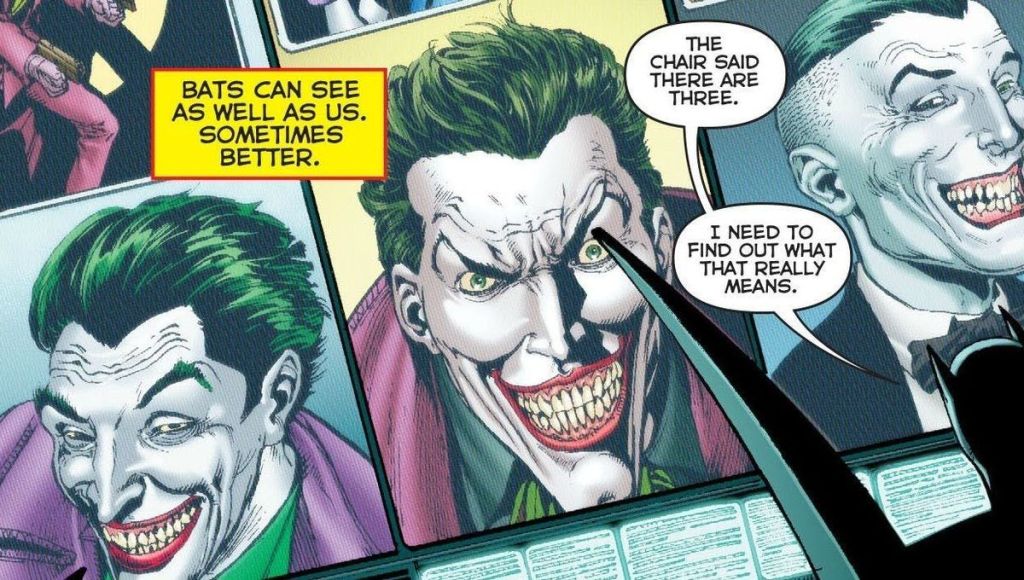
3 Jokers. Photo courtesy of syfy.com 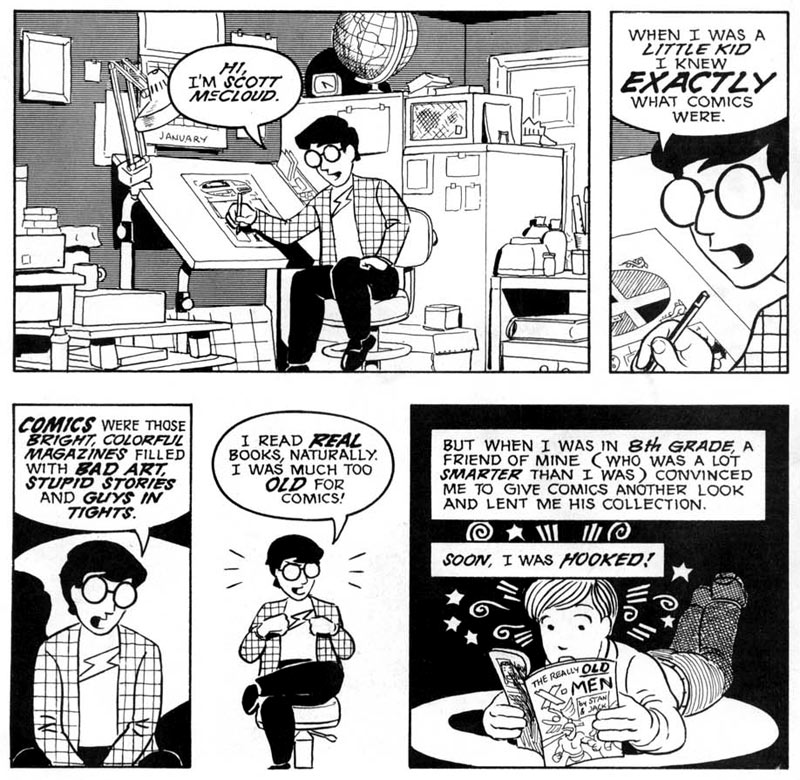
Writing in Art. Photo courtesy of Scott McCloud. 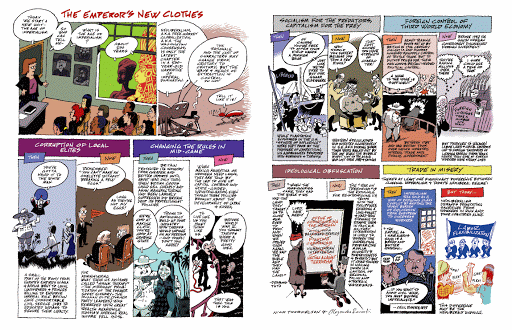
Comic Strip of Neoliberalism. Photo courtesy of Dollars and Sense.
Here is a first draft of our comic:
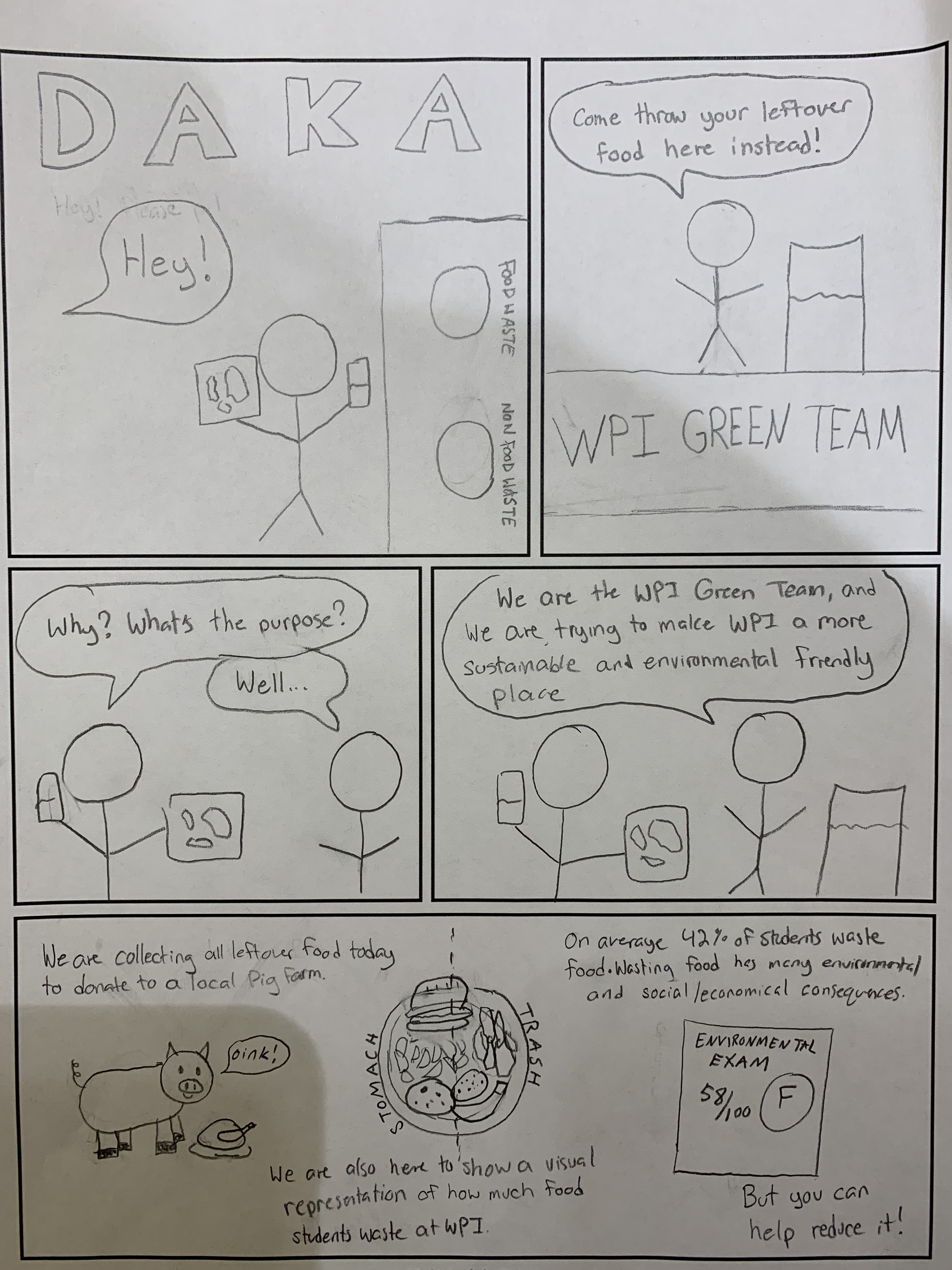
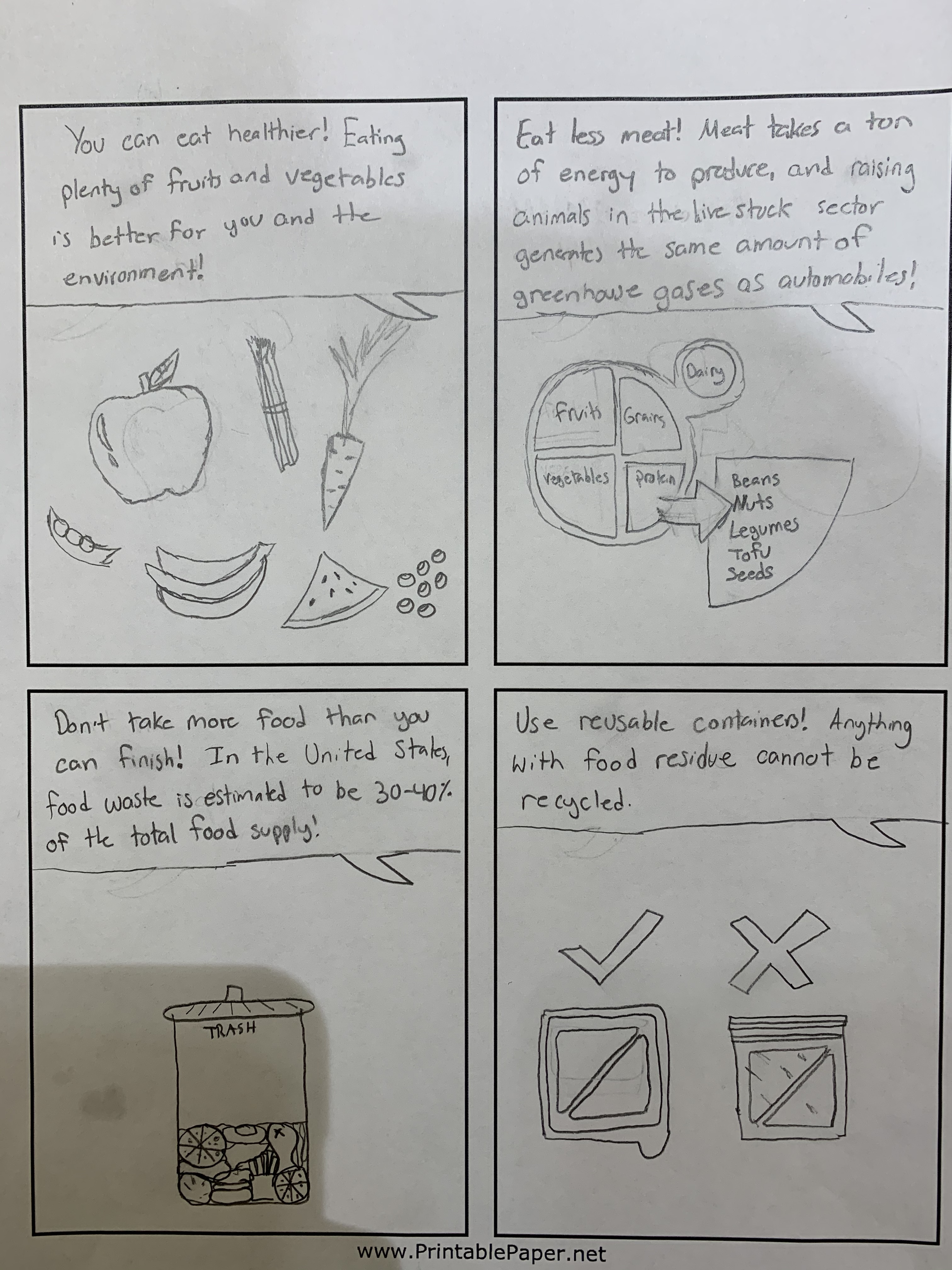
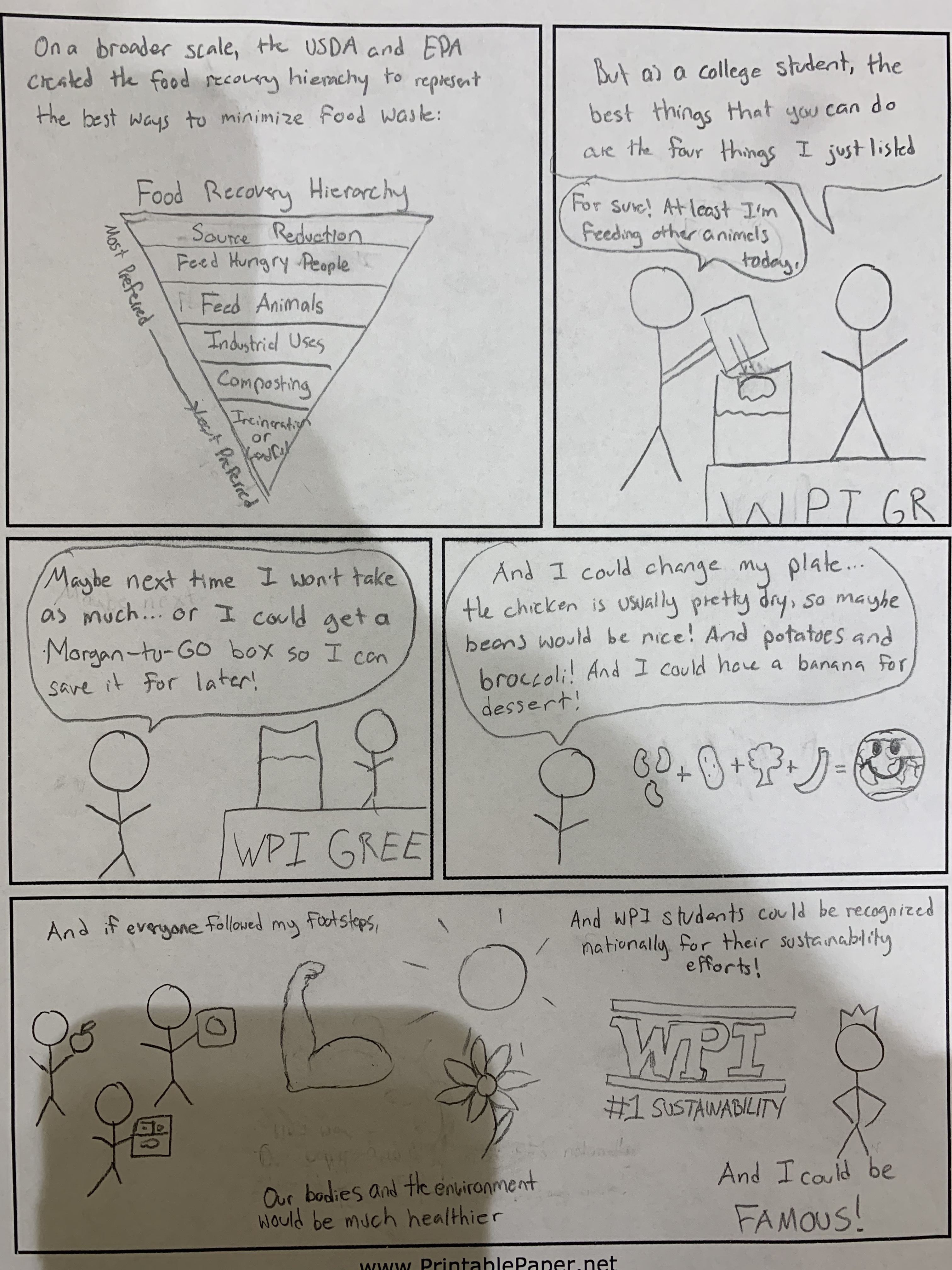
Our comic features a direct dialogue between a student coming out of DAKA and a member of the WPI Green Team. The bottom box on the first page, entire second page, and first and last box on the final page have different relations with picture and text. We tried to include elements of montage, additive, and interdependent relationships to vary the layout and rhetorical impact of our comic.
We started with a blank pre-made template and planned our comic around it. Did other people use this strategy or is there a different method that students used to create their comic?
As this is just a rough draft, we are eager to hear what our classmates have to say about our comic. We appreciate both positive and constructive feedback!
Sources:
McCloud, Scott. “Writing and Art” inUnderstanding Comics: The Invisible Art.2 Ed. 1993, Kitchen Sink Press. 1st print: New York, HarperCollins. 1993.
 Nicole and Nupur's Infographic